

Kansas City ranks #20 out of 100 U.S. metro areas for allergy severity, according to the Asthma and Allergy Foundation of America. That’s not a comfortable position for the roughly 26.8 million Americans who live with asthma (CDC). For KC metro homeowners, the timing of a spring duct cleaning matters more than most people realize.
Here’s why March and early April sit in a narrow window of opportunity. Tree pollen in the Kansas City region starts rising in late February and peaks through May, followed by grass pollen from May through July. Once that wave hits, your HVAC system pulls pollen indoors through every return vent and open window gap. If winter’s dust, pet dander, and debris are still coating your ductwork, the incoming pollen just piles on top of an already contaminated system.
This post covers five specific, data-backed reasons to clean your ducts this spring before Kansas City’s allergy season reaches full intensity. Every statistic is sourced. No scare tactics — just the information you need to decide whether this spring is the right time to clean your ducts.
TL;DR: Spring air duct cleaning before April removes months of winter dust, pet dander, and debris before Kansas City’s peak pollen season hits. KC ranks #20 nationally for allergy severity (AAFA). Cleaning now means your HVAC system starts the cooling season with clear ducts instead of recirculating winter buildup mixed with incoming spring allergens.
Reason 1: How Does Winter Dust Buildup Affect Your Spring Air Quality?
The EPA reports that indoor pollutant concentrations are typically 2 to 5 times higher than outdoor levels, and some pollutants reach 100 times higher indoors. After five to six months of running your furnace with windows sealed, your ductwork has been accumulating dust, skin cells, pet dander, and fabric fibers nonstop since October.
What Happens Inside Your Ducts During Heating Season
Your furnace cycles thousands of times between October and March. Each cycle pushes heated air through supply ducts and pulls room air back through returns. Dust that would otherwise settle on surfaces gets swept into the airstream and deposited along duct walls, at junctions, and around registers. Over a single winter, the accumulation is measurable.
Kansas City winters keep homes buttoned up tight. Unlike mild climates where windows open regularly year-round, KC homeowners seal their houses against freezing temperatures for months at a stretch. That sealing traps indoor air pollution sources — cooking fumes, cleaning product residue, pet dander, and skin cells — inside the home with no fresh air dilution. Your HVAC system circulates those contaminants through the same ductwork, over and over.
When we clean ducts in March and April across Lee’s Summit and Overland Park, the amount of fine gray dust we pull from systems is consistently heavier than what we see during fall cleanings. Winter produces a dense, compacted layer of debris that months of continuous furnace operation presses into the duct surfaces. It doesn’t just sit loosely — it cakes on.
Why Spring Timing Creates a Clean Slate
Cleaning your ducts in March or early April removes that entire winter load before two things happen: pollen season arrives and your HVAC switches from heating to cooling mode. That timing matters. Once your system starts running air conditioning, condensation forms on cooling coils and sometimes inside ductwork. Moisture plus existing dust creates conditions for biological growth that dry winter air didn’t allow.
Cleaning before the transition means your system starts the cooling season with clear, dry duct surfaces. The incoming spring air — pollen and all — passes through clean ducts instead of mixing with five months of accumulated winter debris. It’s the difference between starting a season fresh and starting it behind.
Reason 2: Why Does Kansas City’s Pollen Season Make Spring Duct Cleaning Urgent?
Kansas City ranks #20 out of 100 metro areas for allergy burden (AAFA), and Wichita, Kansas — just 175 miles southwest — holds the #1 spot as the worst Allergy Capital in the country. KC sits in the same pollen corridor, sharing many of the same airborne allergens that push Wichita to the top of the list. That geographic reality makes cleaning your ducts before spring pollen season more than a nice-to-have for KC homeowners.
KC’s Three-Phase Pollen Calendar
Kansas City’s pollen season hits in overlapping waves. Tree pollen starts rising in late February and intensifies through May. Grass pollen overlaps, running from May through July. Ragweed and fall allergens follow from August through October. That means KC residents face nearly eight continuous months of elevated outdoor pollen — and much of it ends up inside your home.
Pollen particles are small enough to enter your home through tiny gaps around windows, doors, and where utility lines penetrate exterior walls. They also ride in on clothing, shoes, and pets. Once inside, pollen gets pulled into your HVAC return vents and circulates through the duct system. If your ducts are already carrying winter dust, the pollen mixes with that existing debris and recirculates every time the system runs.
How Pollen Accumulates Inside Ductwork
Americans spend about 90% of their time indoors (EPA). During spring, you might assume closing windows keeps pollen out. It helps, but it doesn’t solve the problem. Pollen infiltrates through structural gaps that exist in every home — no house is perfectly sealed. Your HVAC system then distributes those particles to every room through the ductwork.
Here’s the compounding effect that makes timing so important. If you clean your ducts in March before tree pollen peaks, you’re starting with a clean system. The pollen that enters during April and May lands on clean duct surfaces with nothing to bind to. That’s a fundamentally different situation than pollen landing on top of five months of dust, pet hair, and debris. A clean duct surface lets more particles pass through to the filter instead of sticking to the walls.
Most allergy-focused cleaning advice tells you to clean during allergy season. But that’s reactive. In the KC metro, the strategic move is to clean before the season — specifically in March or the first two weeks of April. You’re not just removing allergens. You’re removing the sticky, debris-covered duct surfaces that trap and hold incoming allergens all season long.
Reason 3: What Happens When Your HVAC Switches From Heating to Cooling?
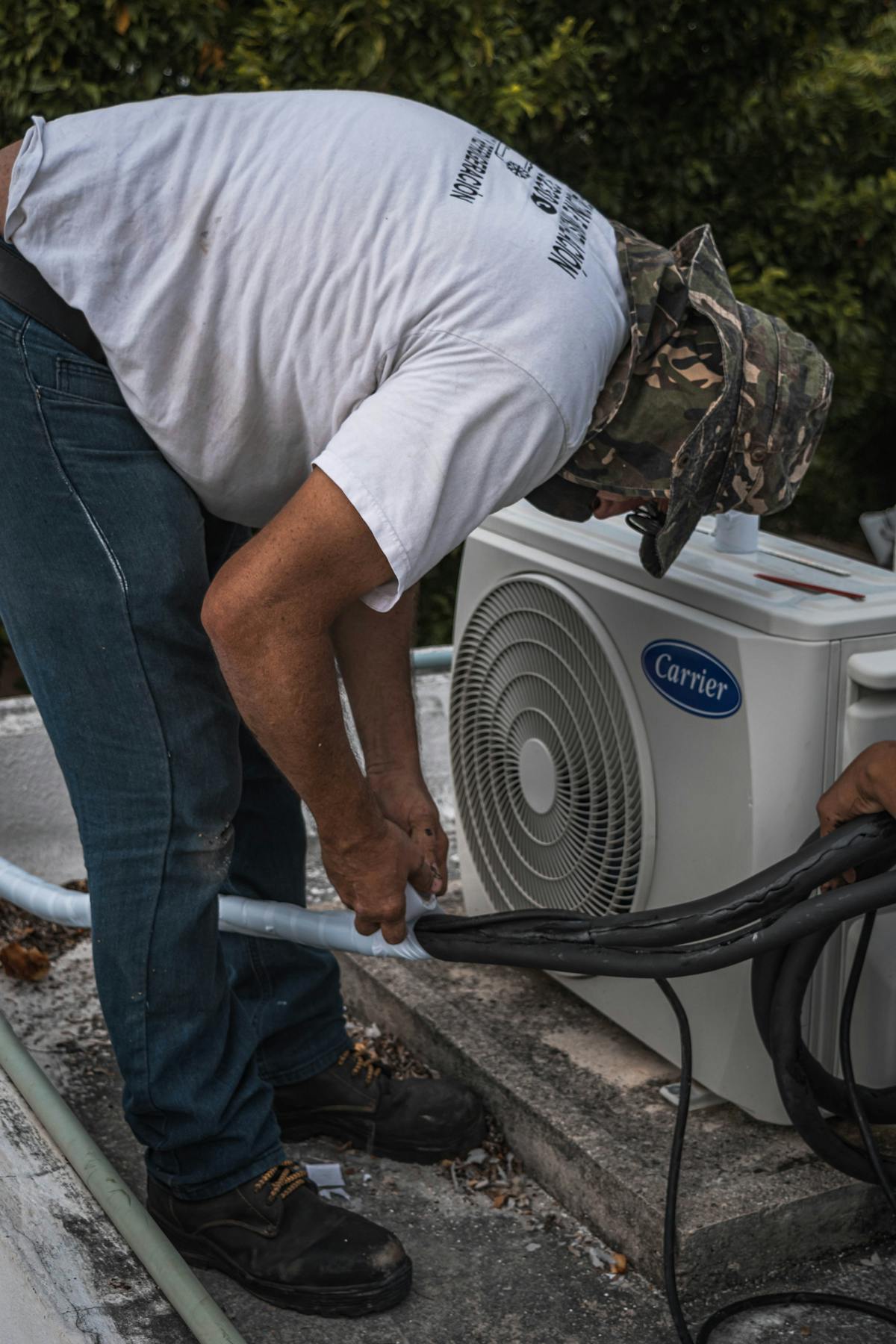
Heating and cooling account for 43 to 48% of a typical home’s energy use, according to ENERGY STAR. That makes your HVAC system the single largest energy consumer in your home. When that system transitions from heating mode to cooling mode each spring, the change introduces new conditions inside your ductwork — conditions that interact with whatever debris winter left behind.
The Heating-to-Cooling Transition Creates Moisture
During winter, your furnace blows hot, dry air through the ducts. That dry environment isn’t friendly to mold or biological growth — it’s too arid. But when your air conditioner kicks on for the first time in spring, cold refrigerant flows through the evaporator coil and condensation forms immediately. That moisture doesn’t stay on the coil. It drips into the drain pan, but some humidity enters the airstream and reaches the ductwork.
Temperature differentials also create condensation directly inside ducts. When cooled supply air runs through ductwork in a hot attic or warm crawl space, the exterior surface of the duct can reach dew point. Moisture beads on the inside surface, particularly at joints and low points. Now add the dust that’s been accumulating all winter, and you have moisture plus organic material — the two ingredients biological growth needs.
Why Cleaning Before the Switch Matters for Efficiency
ENERGY STAR also reports that 20 to 30% of conditioned air is lost through duct leaks in a typical home. Dirty ducts compound that efficiency problem. Debris buildup inside ducts restricts airflow, forcing your air conditioning system to work harder to push cooled air through partially blocked pathways. Your system runs longer cycles, uses more electricity, and still may not cool rooms evenly.
Cleaning ducts before the first AC use removes the airflow restrictions that winter created. Clean ducts let your cooling system operate the way it was designed — delivering conditioned air efficiently through clear pathways. Especially in Lee’s Summit and Overland Park, where summer temperatures push air conditioners hard from June through September, starting the season with clean ductwork means the system isn’t fighting accumulated debris from day one.
The First-Run Dust Blast
Have you ever noticed a stale, dusty smell when you turn on the air conditioning for the first time each spring? That’s the system blowing months of settled dust off duct surfaces and out through your supply vents. That initial blast pushes debris directly into your living spaces — onto furniture, bedding, and into the air you breathe.
Cleaning your ducts before that first AC run eliminates the dust blast entirely. You skip the worst single air quality event of the season. For households with allergy or asthma sufferers, that one moment — the first spring AC cycle — can trigger symptoms that set the tone for weeks.

Reason 4: How Do Dust Mites and Indoor Allergens Compound During Winter?
The NIH reports that 84% of U.S. homes have detectable dust mite levels, and more than 20 million Americans are affected by dust mite allergy. Dust mites feed on organic debris — dead skin cells, pet dander, and other biological material that accumulates in ductwork throughout winter. By March, five months of feeding material has been deposited inside your ducts.
Why Winter Conditions Amplify the Dust Mite Problem
Dust mites don’t just live in bedding and carpet. They thrive anywhere organic debris collects, including inside your ductwork. During winter, when homes are sealed and the furnace runs continuously, the HVAC system deposits a steady stream of skin cells and dander into the duct system. That creates an expanding food source for dust mite populations throughout the home.
The 40 to 85% of asthma sufferers who are sensitive to dust mites face a particular risk during this period (NIH). Every furnace cycle stirs up dust mite waste products — microscopic fecal particles that are among the most potent indoor allergens known. These particles are small enough to stay airborne for extended periods and penetrate deep into the lungs.
The Spring Allergy Double Hit
Here’s where spring timing becomes critical. Outdoor pollen starts rising in March and April. Indoor dust mite allergen loads are at their winter peak. For allergy and asthma sufferers, spring creates a double exposure — outdoor pollen coming in through every crack and gap, while indoor allergens circulate through a duct system loaded with months of organic debris.
The CDC reports that 42.4% of people with asthma had at least one asthma attack in the past year. Spring is when many of those attacks cluster, because the indoor-outdoor allergen combination overwhelms the body’s defenses. Reducing the indoor half of that equation — by cleaning ducts before pollen season — gives allergy sufferers one less source of irritation to fight.
Cleaning your ducts this spring removes the accumulated dust mite food source from your ductwork. It doesn’t eliminate dust mites from your home entirely (nothing does), but it removes the debris they feed on from the system that distributes air to every room. Fewer food sources inside ducts means fewer allergens circulating through your living spaces during the months when your body is already under pollen stress.
Practical Steps to Reduce Dust Mite Exposure This Spring
Professional duct cleaning is one component. Combine it with a few simple habits for the best results. Replace your furnace filter before the first AC use — and choose a filter rated MERV 8 or higher to capture dust mite particles. Wash bedding weekly in hot water (130 degrees F minimum). Vacuum with a HEPA-equipped vacuum at least once a week.
For households with severe dust mite allergies, whole-home air purification adds another layer of protection. Clean ducts, fresh filters, and active air purification working together create a meaningful reduction in the allergen load inside your home — especially during the spring-to-summer transition when Kansas City’s outdoor allergens are at their worst.

Reason 5: Does Spring Duct Cleaning Actually Improve Energy Efficiency?
ENERGY STAR reports that 20 to 30% of conditioned air is lost through duct leaks in a typical home. Add internal debris buildup to that equation, and your cooling system faces two efficiency problems at once: air escaping through leaks and restricted airflow through dirty ducts. Cleaning before the cooling season addresses the restriction half of that equation directly.
How Dirty Ducts Force Your AC to Work Harder
Think of airflow through your ductwork like water through a garden hose. A clean, open hose delivers full flow. A hose with sediment lining the walls delivers less. Your ductwork works the same way. When dust, debris, and pet hair coat the interior surfaces, the effective diameter of the duct narrows. Your system’s blower motor pushes the same volume of air, but the restricted pathway creates resistance.
That resistance means longer run times. Your air conditioner doesn’t cool faster to compensate — it just runs longer cycles to move enough air to satisfy the thermostat. Longer cycles mean higher electricity bills, more wear on the compressor, and uneven cooling where rooms farthest from the air handler get the least airflow.
We’ve tracked before-and-after airflow in homes across the Kansas City metro and consistently find measurable improvement after cleaning in systems that haven’t been serviced in three or more years. Rooms that previously felt stuffy or undercooled often receive noticeably better airflow once the debris restricting their supply runs is removed. The improvement isn’t hypothetical — homeowners feel the difference at the vents.
Starting the Cooling Season Clean Saves Money All Summer
With heating and cooling accounting for 43 to 48% of home energy use (ENERGY STAR), even modest efficiency improvements matter over a full cooling season. Kansas City summers run hot from June through September, with July highs averaging near 90 degrees. That’s four months of heavy AC use. Small inefficiencies — restricted airflow, longer run cycles, uneven cooling — compound over hundreds of cooling cycles into real money.
Spring duct cleaning before the first AC use gives your system clean pathways for the entire cooling season. You’re not just cleaning for one week or one month. You’re setting the efficiency baseline for four to five months of the heaviest HVAC demand your home will see all year. The NADCA recommends duct cleaning every 3 to 5 years and an annual inspection as standard maintenance. If it’s been three or more years since your last cleaning, spring is the ideal time.
Duct Leaks and Debris: A Combined Problem
Duct leaks let conditioned air escape into attics, crawl spaces, and wall cavities where it does nothing for your comfort. Dirty ducts restrict the air that does make it through the system. Together, these two problems can mean your home receives only a fraction of the cooling your system actually produces.
Professional duct cleaning addresses the debris component. During the cleaning process, a thorough technician will also identify visible duct leaks, disconnected joints, and damaged sections that need repair. Sealing leaks is a separate service, but knowing where they are is the first step. Spring is the logical time to get both the cleaning and the assessment done — before you’re relying on that system to keep your home comfortable through a KC summer.
When Should Kansas City Homeowners Schedule Spring Air Duct Cleaning?
The NADCA recommends duct cleaning every 3 to 5 years and an annual inspection as standard maintenance. But timing within the year matters, especially in a high-allergy metro like Kansas City. The ideal spring duct cleaning window for KC homeowners falls between early March and mid-April — after winter’s heaviest heating demand ends but before tree pollen reaches peak intensity.
The March-to-Mid-April Sweet Spot
Why that specific window? March temperatures in Kansas City start warming enough that furnace use drops, which means your duct system gets a brief pause from continuous winter cycling. At the same time, tree pollen counts are still building. You’re cleaning during the lull — after winter’s accumulation but before spring’s allergen onslaught.
Wait until late April or May, and you’re cleaning during the peak. The ductwork is already receiving fresh pollen, grass allergens are starting, and your AC may already be running. You’ve missed the window where cleaning gives you the biggest head start on the season.
Signs Your Ducts Need Attention This Spring
Not sure whether your system is due? Watch for these indicators. Visible dust puffing from supply vents when the system kicks on. Allergy symptoms that worsen indoors but improve when you leave the house. Uneven heating or cooling between rooms. Musty or stale odors from the vents. A dusty film that returns quickly after you clean surfaces.
If any of those sound familiar, your ductwork is telling you something. And if it’s been more than three years since your last professional cleaning — or if you’ve never had it done — spring is the right time to start.
Frequently Asked Questions About Spring Duct Cleaning
How often should I have my air ducts cleaned?
The NADCA recommends professional duct cleaning every 3 to 5 years, with an annual visual inspection. Households with pets, allergy sufferers, smokers, or recent renovations may benefit from more frequent cleaning. In the Kansas City metro, where the AAFA ranks the area #20 nationally for allergy severity, staying closer to the 3-year end of that range makes sense for most homeowners.
Does spring air duct cleaning actually help with allergies?
It reduces one significant source of indoor allergen exposure. The CDC reports 26.8 million Americans have asthma, and 42.4% experienced at least one attack in the past year. Duct cleaning removes accumulated dust, pet dander, dust mite debris, and other irritants from the system that distributes air to every room. It won’t cure allergies, but it reduces the allergen load your body has to fight indoors during the high-pollen months in Kansas City.
Can I clean my air ducts myself?
You can vacuum visible dust from registers and change your furnace filter — and you should. But professional duct cleaning uses negative-pressure equipment and rotary agitation tools that reach deep into the duct system where household vacuums can’t. The supply and return trunk lines, branch runs, and connections to the air handler all require specialized access. DIY efforts address the surface. Professional cleaning addresses the system.
How long does air duct cleaning take?
Most residential duct cleanings take 2 to 4 hours, depending on the size of the home, number of vents, duct condition, and accessibility. Larger homes or systems with heavy debris may take longer. The process involves connecting negative-pressure equipment to your duct system, agitating debris loose from interior surfaces, and extracting it. For a detailed breakdown, see our guide on how long air duct cleaning takes.
Is spring really the best time to clean ducts, or does it matter?
Any time of year works if your ducts are overdue. But spring offers a strategic advantage in Kansas City. You’re removing winter’s full accumulation before the HVAC system switches to cooling mode and before peak pollen season. That timing gives you clean ducts for the longest stretch of heavy system use (cooling season runs June through September). Fall is the second-best option — before heating season starts.
Should I also get my dryer vent cleaned in spring?
Yes. Dryer vents accumulate lint year-round, and spring cleaning is a logical time to address both systems. Clogged dryer vents are a fire hazard and reduce dryer efficiency. If you’re already scheduling duct cleaning, adding a dryer vent cleaning is a practical way to handle both maintenance items at once. Our team can inspect and clean both during the same visit.
Clean Ducts Before Allergy Season: Your Next Step
Kansas City’s position as a top-20 allergy metro isn’t changing. The pollen seasons aren’t getting shorter. And your HVAC system will keep cycling air through the same ductwork day after day, month after month. What you can control is what’s inside those ducts when the heavy pollen months arrive.
Spring air duct cleaning before April gives KC homeowners five measurable advantages: removing winter’s dust accumulation, clearing the path before pollen season peaks, preparing the HVAC system for the heating-to-cooling transition, reducing indoor dust mite allergen loads, and improving energy efficiency for the entire cooling season ahead.
If it’s been three or more years since your last professional cleaning — or if you’ve never had it done — the March-to-mid-April window is your best opportunity. The job typically takes 2 to 4 hours, and the results last for years.
To schedule a spring cleaning or ask questions about your home’s ductwork, call 816-377-1898. We serve homeowners throughout Lee’s Summit, Overland Park, and the surrounding Kansas City metro.