
The air inside your Overland Park home is almost certainly worse than what’s outside. The EPA reports that indoor pollutant concentrations typically run 2 to 5 times higher than outdoor levels — and for some contaminants, indoor concentrations reach 100 times higher. That statistic applies everywhere. But Overland Park has a specific combination of factors that pushes Johnson County homes toward the worse end of that range.
Kansas City ranks #20 in the Asthma and Allergy Foundation of America (AAFA) Allergy Capitals report. Wichita, 175 miles southwest on the same Great Plains wind corridor, holds the #1 spot. Overland Park sits on KC’s western edge — the first suburb to catch pollen carried by prevailing southwest winds from the nation’s worst allergy city. That geographic exposure matters. It shows up inside OP homes.
This guide covers eight facts about Overland Park indoor air quality that most homeowners don’t know. Each one connects a specific local condition to what’s happening inside your ductwork, your lungs, and your energy bills. Every statistic comes from a named source. There’s no fluff and no scare tactics — just information you can act on to protect your family’s health and your home’s efficiency.
TL;DR: Overland Park indoor air quality faces compounded threats from Johnson County’s 1970s-2000s housing stock, proximity to Wichita’s #1 allergy corridor (AAFA), and Kansas City’s #20 allergy ranking. The EPA reports indoor air can be 2-5x more polluted than outdoor air. OP homeowners should inspect ductwork annually, clean every 3-5 years, and consider air purification for allergy-prone households.
Fact 1: Why Is Overland Park Indoor Air Quality Worse Than You Think?
Americans spend roughly 90% of their time indoors (EPA), and the air they breathe there is measurably worse than what’s outside. For Overland Park residents, this isn’t an abstract national statistic. Johnson County’s specific geography, housing patterns, and climate create conditions that concentrate indoor pollutants beyond what many other metro suburbs experience.
The Numbers Behind OP’s Air Quality Challenge
Three data points tell the story. First, the EPA’s 2-to-5x indoor pollution finding applies to every home in America — but OP homes have more pathways for contaminants to enter and accumulate. Second, Kansas City’s #20 allergy ranking (AAFA) puts the entire metro above the national average for airborne allergen burden. Third, Wichita’s #1 ranking matters because prevailing southwest winds carry grassland pollen directly into Johnson County before it reaches the rest of the metro.
What does “2 to 5 times worse” actually look like in your home? It means pollen that enters through your front door doesn’t leave. It means dust mite waste accumulates in ductwork and recirculates with every HVAC cycle. It means volatile organic compounds from cleaning products, furniture, and building materials concentrate in sealed indoor spaces. And in Overland Park, it means all of this happens in a community sitting squarely in the path of one of North America’s most prolific pollen corridors.
Most indoor air quality discussions treat the EPA’s 2-to-5x statistic as universal. It is universal in direction — indoor air is worse everywhere. But the magnitude varies dramatically by location. A home in coastal San Diego faces different contaminant profiles than a home in Overland Park. OP homeowners deal with prairie pollen, extreme temperature swings that keep HVAC systems running 8-10 months per year, and a housing stock that was largely built before modern air-sealing standards. These aren’t minor variables. They push many OP homes toward the higher end of that 2-to-5x range.

Fact 2: How Does the Wichita Pollen Corridor Affect Overland Park Homes?
Wichita, Kansas has held the #1 spot in the AAFA’s Allergy Capitals report for three consecutive years (AAFA). It sits just 175 miles southwest of Overland Park — and during peak pollen months, prevailing winds carry allergens from the Great Plains grasslands directly into the Kansas City metro’s western suburbs. OP catches that pollen stream before any other major KC suburb.
How Pollen Travels From Wichita to Johnson County
Prevailing winds in Kansas blow from the southwest to the northeast during spring, summer, and early fall. These are exactly the months when tree, grass, and ragweed pollen peak. Wichita sits in the heart of the Great Plains grasslands — one of North America’s most prolific pollen-producing regions. The pollen doesn’t dissipate over 175 miles. It rides wind currents northeast and settles across the KC metro’s western edge.
Overland Park’s geography works against it here. Suburbs east of the metro core — Lee’s Summit, Blue Springs, Independence — get some buffering from urban density and the terrain that breaks up wind patterns. OP, on the Kansas side and on the western fringe, catches the pollen stream more directly. Neighborhoods like Deer Creek, Lionsgate, and the subdivisions along 135th Street sit in open terrain with minimal wind barriers between them and the grasslands to the southwest.
So what happens when that pollen reaches your home? It enters on clothes, shoes, and pets. It slips through window seals and door gaps. Once inside, your HVAC return vents pull it into the duct system. Without regular cleaning, those allergens settle into ductwork walls and recirculate every time the furnace or AC kicks on. You might close the windows, but the pollen is already inside — and your duct system is redistributing it to every room.
What This Means for Your Family’s Health
The CDC reports that 26.8 million Americans have asthma, roughly 8.2% of the population (CDC). For those living in Overland Park, the pollen corridor effect compounds their daily allergen exposure. Clean ductwork can’t stop pollen from entering your home. But it eliminates the accumulated reservoir of allergens sitting inside your system, reducing total exposure significantly.
Have you noticed that your allergies feel worse indoors than outside during certain months? That’s the duct system acting as an allergen amplifier. Outdoor pollen counts rise and fall with weather patterns. Indoor allergen levels stay elevated because ductwork stores and recirculates what’s already entered the home — day after day, cycle after cycle.
Fact 3: What Does Overland Park’s Housing Stock Mean for Indoor Air Quality?
Overland Park’s housing boom spanned the 1970s through the early 2000s, creating a housing stock where the majority of homes are 25 to 55 years old. According to the National Air Duct Cleaners Association (NADCA), ductwork should be professionally cleaned every 3 to 5 years. Most OP homes have ductwork that’s never been cleaned — not once in three, four, or five decades of continuous use.
OP’s Growth Timeline and What It Built
Drive through different parts of Overland Park, and the construction eras are visible. Northern OP near 75th Street and Metcalf Avenue features homes from the 1950s and 1960s — the city’s earliest residential development. The middle band from 95th to 135th Street is dominated by 1970s and 1980s construction. These are the neighborhoods that make up OP’s identity: Indian Creek, Nottingham, Oak Park, the College Boulevard corridor, and the neighborhoods surrounding Blue Valley schools.
South Overland Park — areas near 151st Street, 159th Street, and the Stilwell corridor — represents the 1990s and 2000s expansion. Even these “newer” homes are now 20 to 30 years old. And the duct systems installed during any of these eras were designed for the HVAC technology of that time, not for modern high-efficiency systems that push more air volume.
We’ve cleaned homes across every era of Overland Park construction. The 1970s and 1980s homes near Indian Creek and Oak Park typically have galvanized steel ductwork — durable but with decades of buildup in the seams and joints. The 1990s flex duct systems in south OP neighborhoods show different problems: the corrugated interior of flex duct traps debris in its ridges, creating a surface that’s harder to clean than smooth steel but also more prone to accumulation. What surprises most homeowners is the volume of material that comes out. After 30 or 40 years without cleaning, we’ve pulled pounds of compacted dust, pet hair, insulation fibers, and biological debris from a single home’s duct system.
Larger Homes Mean More Ductwork
Johnson County has a higher proportion of larger homes compared to the broader Kansas City metro average. More square footage means more trunk lines, more branch runs, more supply and return vents, and more total surface area where contaminants accumulate. A 3,500-square-foot home near Deer Creek or Lionsgate has significantly more duct infrastructure than a 1,400-square-foot ranch in other parts of the metro.
That scale matters for two reasons. First, more ductwork means more places for allergens and debris to settle. Second, longer duct runs create more opportunities for air to pick up contaminants between the furnace and the register. What starts as filtered air at the air handler picks up dust, dander, and biological particles as it travels through 50 or 60 feet of ductwork before reaching your bedroom.
Fact 4: How Do Kansas Temperature Extremes Impact Overland Park Indoor Air Quality?
ENERGY STAR reports that heating and cooling accounts for 43 to 48% of total home energy use. In Overland Park, Kansas’s extreme seasonal temperatures push that percentage toward the top of the range — and every hour your HVAC system runs, it’s cycling air through ductwork and depositing contaminants along the way.
The 8-to-10-Month HVAC Season
Kansas weather is extreme. Overland Park homeowners run air conditioning from May through September and heat from November through March. That’s 8 to 10 months of near-continuous HVAC operation. Only brief windows in April and October give the system a rest. Compare that to a city like San Diego, where HVAC runs perhaps 3 to 4 months per year. OP homeowners cycle air through their ductwork roughly twice as many hours annually.
Every hour the system runs, air passes over whatever’s inside your ducts. Dust gets redistributed. Pollen recirculates. Biological growth releases spores into the airstream. The math is simple: more operating hours equals more exposure to whatever contaminants live in your ductwork. And in OP’s climate, the operating hours are among the highest in the country.
Humidity Swings Create Biological Growth Opportunities
Kansas summers bring humidity. Kansas winters bring dry air. That seasonal swing creates conditions inside ductwork where moisture condenses during humid months, encouraging mold and bacterial growth. When the dry winter air arrives, those colonies may go dormant — but they don’t disappear. They reactivate the following summer. Each cycle adds another layer of biological contamination.
The WHO reports that air pollution contributes to 7 million premature deaths globally each year. While outdoor industrial pollution drives most of that number, indoor biological contaminants — mold, bacteria, dust mite waste — pose genuine health risks, particularly for children, elderly residents, and anyone with respiratory conditions. In Overland Park’s climate, these biological contaminants find ductwork to be an ideal habitat.

Fact 5: Which Overland Park Neighborhoods Face the Highest IAQ Risks?
Not all Overland Park neighborhoods face identical indoor air quality challenges. Factors like housing age, tree density, proximity to open land, and elevation create meaningful differences across the city. The EPA’s 2-to-5x indoor pollution finding (EPA) applies everywhere, but local conditions push certain OP neighborhoods toward the higher end of that range.
Tree-Heavy Neighborhoods and Pollen Load
Overland Park’s most established neighborhoods have the most mature trees. That’s great for shade and property values. It’s not great for pollen levels. Areas near the Indian Creek greenbelt, the neighborhoods surrounding Roe Park, and the tree-lined streets east of Metcalf Avenue produce enormous seasonal pollen loads from oak, maple, elm, and ash trees. During spring months, you can see the yellow-green pollen coating cars and outdoor surfaces. A significant portion of that pollen enters homes and ends up inside ductwork.
We’ve noticed a consistent pattern in our Overland Park service calls. Homes near the Indian Creek trail system and other greenbelt areas tend to accumulate pollen and organic debris in their ductwork noticeably faster than homes in newer subdivisions with less mature landscaping. A home near 95th and Antioch might need duct cleaning at the 3-year mark, while a comparable home near 159th and Metcalf — surrounded by younger trees and more open terrain — might go the full 5 years. The trees are beautiful. They just produce a lot of pollen, and that pollen has to go somewhere.
Proximity to Construction and Open Land
South Overland Park is still growing. Construction along the 159th Street corridor, near the Prairiefire area, and in the developing parcels toward Stilwell generates construction dust that disperses across surrounding neighborhoods. Homes within a half-mile of active construction sites often see increased dust accumulation on surfaces and inside HVAC systems.
Homes near the remaining agricultural and open grassland on OP’s southern and western edges also face higher pollen and particulate exposure. These areas lack the urban tree canopy that partially filters wind-carried particles. Instead, grassland pollen and topsoil dust travel unimpeded into adjacent residential areas.
Schools, Parks, and Community Spaces
Overland Park’s parks and schools influence neighborhood-level air quality too. The city maintains over 1,800 acres of parkland, including large green spaces like Deanna Rose Children’s Farmstead and the Overland Park Arboretum. These are community assets, but they’re also significant sources of grass pollen, tree pollen, and mold spores during certain seasons.
Families living near Blue Valley schools, Shawnee Mission schools, or OP’s larger parks should factor proximity into their indoor air quality planning. More green space nearby generally means more pollen entering the home — and more reason to maintain clean ductwork and consider air purification as an additional layer of protection.
Fact 6: What’s Actually Inside Your Overland Park Home’s Ductwork?
The NIH reports that 20 million Americans are affected by dust mite allergy, and 84% of U.S. households have detectable levels of dust mites. Your ductwork is one of the primary habitats where dust mite allergens accumulate and recirculate. But dust mites are just one component of what’s living inside a typical Overland Park home’s duct system.
The Layer-by-Layer Buildup
Ductwork accumulates contaminants in layers, much like geological sediment. The oldest material sits against the duct walls. Newer deposits layer on top. Over 30 to 50 years in a never-cleaned Overland Park home, those layers represent a compressed history of everything that’s been airborne inside the house.
The typical contents include household dust (a mix of skin cells, fabric fibers, and soil particles), pollen from every spring and summer the home has experienced, pet dander from current and former pets, dust mite colonies feeding on organic debris, mold spores that accumulated during humid seasons, insect fragments, insulation fibers from initial construction or later renovations, and volatile organic compounds that have off-gassed from building materials and settled on duct surfaces.
Based on our duct cleaning work across Johnson County, we’ve observed that Overland Park homes with pets consistently have thicker buildup in return vent runs compared to supply runs. Returns sit closer to floor level, where pet dander settles, and they pull air — along with pet hair and dander — directly from the living space. In homes with multiple dogs or cats, the return vents near primary living areas often contain dense mats of pet hair that restrict airflow by 20 to 30%. Supply vents, which push air outward, show less pet-related accumulation but more pollen and fine dust deposits. This distinction matters because it means homes with pets need particular attention to the return side of the system during cleaning.
Why Your Filter Doesn’t Catch Everything
Many homeowners assume their furnace filter handles airborne contaminants. Filters do catch a portion of particles — the exact amount depends on the filter’s MERV rating. A standard fiberglass filter (MERV 1-4) catches only the largest particles. Even a high-quality pleated filter (MERV 11-13) allows fine particles to pass through and deposit in ductwork.
Here’s the part most people miss. The furnace filter sits between the return duct and the air handler. It filters air before it reaches the blower and heat exchanger. But it does nothing for the supply side — the ductwork that carries conditioned air from the furnace to each room. Contaminants that entered through leaky duct joints, during construction, or before the filter was installed remain in the supply runs indefinitely. Your filter protects the furnace. It doesn’t protect the supply ductwork or, ultimately, the rooms you breathe in.
Fact 7: Can You Actually Improve Overland Park Indoor Air Quality?
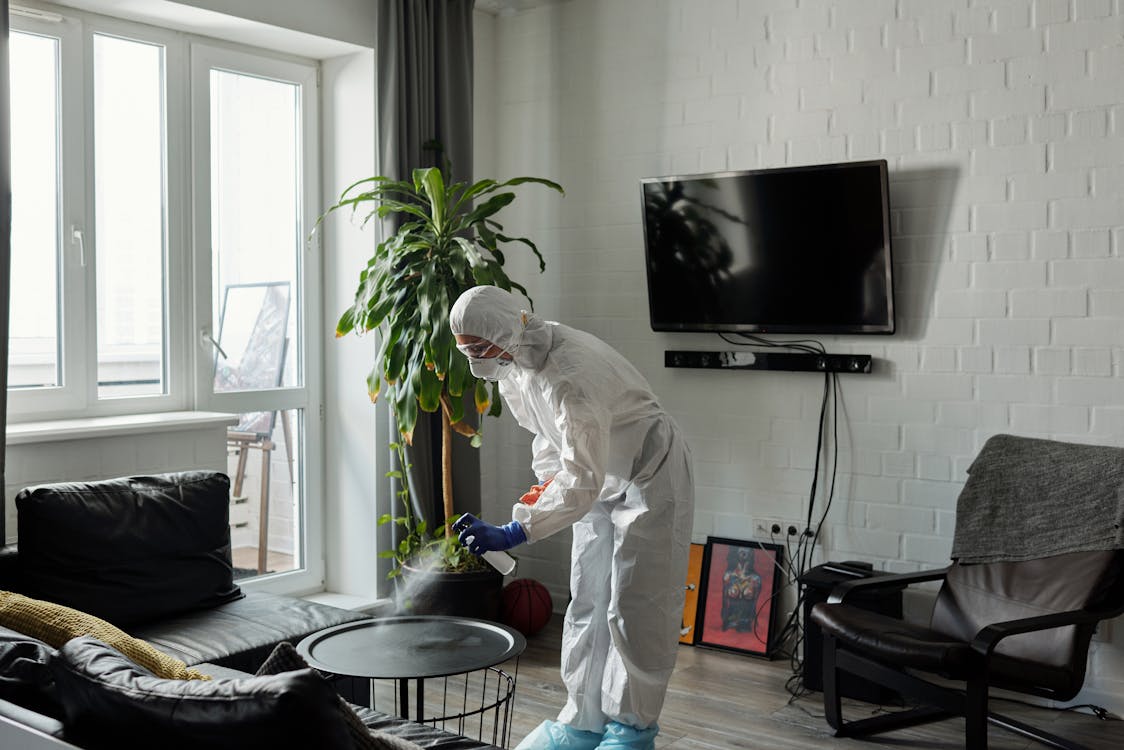
ENERGY STAR reports that typical homes lose 20 to 30% of conditioned air through duct leaks and gaps. Sealing those leaks, cleaning the ductwork, upgrading filtration, and adding active air purification can dramatically improve Overland Park indoor air quality. The problem is real, but it’s also fixable — with a structured, layered approach that addresses the specific challenges OP homes face.
Layer 1: Professional Duct Cleaning
The foundation of any indoor air quality improvement is removing what’s already accumulated inside the system. Professional duct cleaning uses negative pressure vacuum systems and rotary agitation tools to physically remove decades of buildup from every supply and return run. For Overland Park homes that have never been cleaned, this single step removes the largest reservoir of contaminants in the house.
NADCA recommends cleaning every 3 to 5 years (NADCA). For OP homes in tree-heavy neighborhoods or with pets, the 3-year interval makes more sense. The first cleaning after decades of neglect typically removes the most material. Subsequent cleanings on a regular schedule maintain that cleaner baseline and prevent the kind of heavy buildup that takes multiple passes to address.
Layer 2: Duct Sanitization
Physical cleaning removes debris. Duct sanitization addresses what physical cleaning can’t fully eliminate — biological contaminants like mold spores, bacteria, and odor-causing organisms. An EPA-registered antimicrobial treatment applied to freshly cleaned duct surfaces creates a hostile environment for biological growth. In OP’s humid summer climate, where ductwork is prone to condensation, sanitization provides protection that lasts well beyond the cleaning visit.
Not every home needs sanitization. It’s most valuable when musty odors, visible mold, or biological contamination is present during the cleaning inspection. But for Overland Park homes where humidity and age combine to create ideal conditions for biological growth, it’s a worthwhile addition that extends the effective life of the cleaning.
Layer 3: Air Purification
Duct cleaning removes what’s accumulated. Air purification catches what’s still airborne. Whole-home air purification systems install directly into your HVAC system and treat air as it circulates. For Overland Park households where allergies are a serious concern — especially during peak pollen months from April through October — purification provides continuous protection that cleaning alone can’t match.
Think of it this way. Duct cleaning is periodic maintenance. Air purification is continuous defense. The two work together. Clean ducts ensure the purification system isn’t overwhelmed by years of accumulated debris. Active purification prevents new contaminants from building up between cleanings. For families near OP’s greenbelts, parks, or open grassland, this combination makes the strongest case.
Layer 4: Filter Maintenance and Home Practices
Replace your furnace filter every 60 to 90 days — more often during peak pollen months or if you have pets. Choose a pleated filter rated MERV 11 or higher for meaningful particle capture. Run bathroom exhaust fans during and after showers to remove humidity before it enters ductwork. Use doormats and remove shoes at entry points to reduce the pollen and soil tracked into the home.
These habits won’t transform your Overland Park indoor air quality on their own. But combined with professional duct cleaning, sanitization, and purification, they create a comprehensive system where each layer supports the others. No single step solves the problem. All four together produce measurable results.
Fact 8: Does Your Dryer Vent Affect Overland Park Indoor Air Quality?
The National Fire Protection Association reports 15,970 home fires per year involving dryers and washing machines, with failure to clean as the leading cause at 33% of incidents (NFPA). But fire risk isn’t the only reason your dryer vent matters for indoor air quality. A clogged dryer vent pushes lint, moisture, and combustion gases back into your home — directly affecting the air your family breathes.
The Indoor Air Quality Connection
When a dryer vent is partially blocked, the dryer can’t exhaust air efficiently. Lint particles that should exit through the exterior vent cap instead leak into the laundry room through gaps in the duct connections. Excess moisture that should vent outside stays inside, raising humidity levels that encourage mold growth — in the laundry room, in adjacent rooms, and potentially in nearby HVAC ductwork.
Johnson County winters are cold. Spring storms bring heavy rain. Both seasons mean more laundry, more dryer loads, and more lint production. Overland Park homeowners tend to run dryers more frequently than people in milder climates, accelerating the buildup inside vent lines. If you’re thinking about Overland Park indoor air quality, the dryer vent is part of the equation.
Bundle Dryer Vent Cleaning With Duct Cleaning
Professional dryer vent cleaning takes 30 to 60 minutes. A technician disconnects the dryer, runs a rotating brush through the full vent line length, and vacuums out the accumulated lint and debris. If you’re already scheduling air duct cleaning, adding dryer vent cleaning to the same appointment is the most efficient approach. One visit. Both systems addressed. Your entire home’s ventilation — HVAC and dryer exhaust — gets cleaned at once.
What Makes Overland Park Different From Other Kansas City Suburbs?
Overland Park is the second-largest city in Kansas, with roughly 200,000 residents (U.S. Census Bureau). It’s not a small bedroom community. The city’s size, housing diversity, and geographic position create Overland Park indoor air quality conditions that differ meaningfully from other KC metro communities like Lee’s Summit, Olathe, or Shawnee.
Geographic Position Matters
OP’s position on KC’s western edge puts it first in line for weather systems and airborne particles moving from the southwest. Lee’s Summit, on the Missouri side, sits east of the metro core and gets some buffering. Olathe is slightly more protected by OP itself. But Overland Park faces the open Kansas plains directly, with minimal urban density between it and the grasslands that produce the metro area’s heaviest pollen loads.
This isn’t about whether other suburbs have indoor air quality challenges — they all do. It’s about degree. OP’s western exposure, combined with its mature tree canopy in established neighborhoods, creates a double pollen source: regional grassland pollen from the southwest and local tree pollen from the neighborhood canopy. Homes near Indian Creek, Tomahawk Creek, and the larger greenbelt corridors sit at the intersection of both sources.
Community Resources That Affect IAQ Awareness
Johnson County has strong community health resources. The Johnson County Department of Health and Environment tracks local air quality data and provides allergy season guidance. Overland Park’s proximity to well-regarded medical facilities means families with asthma and allergy concerns have access to specialists who can identify indoor air quality as a contributing factor to respiratory symptoms.
But awareness doesn’t always translate to action. Many OP homeowners know that allergies are a problem in the area. Fewer connect that problem to their ductwork specifically. The duct system is out of sight, which makes it easy to overlook. That gap between awareness and action is exactly why these facts matter — connecting what homeowners already feel (allergy symptoms, stuffy rooms, visible dust) to a specific, addressable cause (contaminated ductwork).
Frequently Asked Questions About Overland Park Indoor Air Quality
How bad is indoor air quality in Overland Park compared to other cities?
The EPA reports indoor air is 2-5x more polluted than outdoor air nationally (EPA). Overland Park faces compounding factors that push homes toward the higher end: Kansas City’s #20 AAFA allergy ranking, proximity to Wichita’s #1 allergy corridor, 1970s-2000s housing stock with aging ductwork, and 8-10 months of annual HVAC operation. While direct city-to-city IAQ comparisons are difficult, OP’s specific combination of geographic, climatic, and housing factors creates above-average indoor air quality challenges relative to many U.S. suburbs.
How often should Overland Park homeowners clean their air ducts?
NADCA recommends professional cleaning every 3 to 5 years with annual inspections (NADCA). Most Overland Park homeowners benefit from the 3-year end of that range because of the pollen corridor effect, heavy HVAC usage, and KC’s elevated allergy ranking. Homes with pets, allergy sufferers, or locations near greenbelts and mature trees may need cleaning even sooner. Annual camera inspections reveal actual duct conditions so you can make decisions based on evidence, not guesswork.
Can air purification systems improve indoor air quality in Overland Park homes?
Yes. Whole-home air purification systems install directly into your HVAC system and continuously treat circulating air. They’re most effective when paired with clean ductwork — purification catches what’s airborne, while duct cleaning removes what’s accumulated. For Overland Park families dealing with seasonal allergies from the Wichita pollen corridor, purification provides ongoing protection during peak months that duct cleaning alone can’t match.
What are the signs that my Overland Park home has poor indoor air quality?
Watch for these indicators: dust settles on surfaces within a day or two of cleaning, allergy or asthma symptoms worsen when you’re indoors, musty or stale odors come from HVAC vents, visible dust or debris around vent register openings, and uneven airflow between rooms. The CDC reports 42.4% of asthma sufferers experience at least one attack per year (CDC). If symptoms consistently improve when you leave the house, your indoor air is likely a trigger.
Does new construction in south Overland Park affect indoor air quality?
Active construction generates dust that disperses into surrounding neighborhoods. Homes within a half-mile of construction sites along the 159th Street corridor, the Prairiefire area, or developing parcels near Stilwell may experience increased particulate levels. Even new construction homes themselves can have IAQ issues from drywall dust, paint fumes, and adhesive off-gassing that enter ductwork during the building process. Scheduling duct cleaning after construction wraps up removes those initial contaminants before your family moves in.
Should I get duct sanitization along with cleaning?
Duct sanitization applies an EPA-registered antimicrobial treatment to freshly cleaned duct surfaces, targeting mold spores, bacteria, and biological contaminants. It’s recommended when musty odors, visible mold, or biological growth is found during cleaning. In Overland Park’s climate — with humid summers that create condensation inside ductwork — sanitization provides meaningful protection against biological regrowth. Not every home needs it, but homes with known moisture issues or mold history benefit significantly.
Take Control of Your Overland Park Indoor Air Quality
Eight facts, one conclusion: Overland Park indoor air quality faces specific, measurable challenges that generic advice doesn’t address. Johnson County’s housing stock puts most OP homes on ductwork that’s 25 to 55 years old and has never been professionally cleaned. The Wichita pollen corridor delivers allergens from the nation’s #1 allergy city directly into OP’s western-edge neighborhoods. And Kansas’s extreme temperatures keep HVAC systems running 8 to 10 months per year, cycling contaminants through every room in the house.
The data is clear. Indoor air runs 2-5x worse than outdoor air (EPA). Kansas City ranks #20 for allergies (AAFA). And 84% of homes have detectable dust mites (NIH). These aren’t theoretical risks. They’re measured realities that affect what your family breathes in your Overland Park home every day. But each one is addressable through professional duct cleaning, sanitization, air purification, and smart home practices.
The first step is straightforward: find out what’s inside your ducts. A professional inspection shows you the actual condition of your duct system so you can make an informed decision. If the ducts are clean, you’ll know. If they’re not, you’ll have the information you need to choose the right combination of air duct cleaning, sanitization, air purification, or register replacement for your home’s specific needs.
For dryer vent cleaning, that can be bundled into the same visit. And if you’re across the state line in Missouri, we serve Lee’s Summit and the surrounding area with the same process and standards. Call 816-377-1898 or visit our services page to schedule your inspection. Your home’s air quality is a problem you can actually solve — and it starts with knowing what’s inside the system.